

Neonatal Abstinence Syndrome (NAS), Prenatal Alcohol Exposure (PAE) and Fetal Alcohol Spectrum Disorder (FASD)
Neonatal abstinence syndrome (NAS) is the name commonly used in neonatal and maternity guidance for a group of withdrawal symptoms that can affect some babies after birth when they have been exposed to certain medicines, alcohol or drugs during pregnancy.
What to look for after birth
NHS and children’s hospital guidance explains that withdrawal symptoms may begin within the first 24 to 48 hours after birth, but they can also appear later, sometimes five to ten days after birth depending on the substance. Alcohol withdrawal may begin within a few hours after birth and the withdrawal symptoms from alcohol may last up to 18 months.
Alcohol exposure should therefore be considered early when there is known or suspected alcohol use in pregnancy, and follow-up should not focus only on the immediate newborn period.
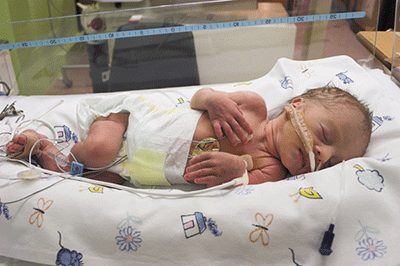
For babies, children, young people and adults affected by prenatal alcohol exposure, early recognition matters.
Understanding whether alcohol exposure occurred during pregnancy can help professionals identify possible Fetal Alcohol Spectrum Disorder (FASD), plan appropriate support and avoid missed opportunities for early intervention.
Clinical guidance and reviews consistently emphasise that early recognition, diagnosis, therapy, special education support and social care involvement can improve outcomes and reduce secondary difficulties.
Symptoms
Symptoms vary for each baby with NAS and may depend on the substance type, the dose, how long it was used for, the timing of the last dose, whether more than one substance was involved, and whether the baby was born early or at term.
Where alcohol misuse or alcohol dependence is known or suspected during pregnancy, professionals should consider both possible newborn withdrawal/adaptation symptoms and the longer-term risk of FASD.
-
High-pitched crying, excessive crying, irritability, restlessness or being difficult to console.
-
Tremors, trembling, shakiness, jitteriness, increased muscle tone, tight muscles, overactive reflexes or exaggerated startle responses.
-
Feeding difficulties, poor suck, overactive sucking, uncoordinated sucking, vomiting, diarrhoea, dehydration, poor weight gain or slow weight gain.
-
Difficulty settling or sleeping after feeds, including sleep disturbance in babies exposed to alcohol before birth.
-
Fast breathing, sneezing, stuffy nose, hiccups, frequent yawning or respiratory distress.
-
High or unstable temperature, fever, sweating, skin mottling, skin irritation or severe nappy rash.
-
Poor intrauterine growth, low birth weight, premature birth, poor growth after birth or concerns about head growth, particularly where prenatal alcohol exposure is known or suspected.
-
Possible alcohol-related physical indicators, including differences in head or facial development, congenital heart problems or other birth defects, where these are identified alongside a history of prenatal alcohol exposure.
-
Early concerns about movement, tone, coordination, vision, hearing, feeding, sensory regulation or neurobehavioural regulation.
-
Later developmental indicators that should prompt review of prenatal alcohol exposure history, including delay in speech and language, learning, attention, memory, emotional regulation, impulse control, social communication or behaviour.
-
Seizure-like episodes or fits, which need urgent medical assessment.
Polysubstance exposure and alcohol
Clinical summaries of NAS emphasise that NAS is most commonly associated with opioid exposure but may be complicated by exposure to benzodiazepines, alcohol and other drugs. This is an important gap for services to address: where drug exposure is identified in pregnancy, alcohol exposure should also be considered because substance use may be combined, under-reported or incompletely recorded.
Children’s hospital guidance also highlights that people using drugs may be more likely to use more than one substance, which can complicate assessment and treatment.
Alcohol does not always present as a simple newborn withdrawal picture. Its effects may be developmental and lifelong, and may only become clearer as the child grows. This means that a baby assessed for NAS may also need accurate documentation of any known or suspected prenatal alcohol exposure so that Fetal Alcohol Spectrum Disoorder (FASD) is not missed later in childhood, adolescence or adulthood.
'Ruling alcohol exposure in', when it is known or reasonably evidenced, can support earlier developmental surveillance, more appropriate referrals, better educational planning and more effective family support. It also helps professionals avoid viewing later behaviour as purely social, emotional or behavioural when it may reflect brain-based vulnerability linked to prenatal alcohol exposure.
A further gap is that alcohol misuse may not be disclosed, asked about consistently, or recorded in a way that follows the child into later assessments. This matters because alcohol-related harm is dose-related at a population level, but an individual child’s needs cannot be predicted from appearance alone.
Many children with FASD do not have obvious facial features (only 10% of all those with FASD; 90% don't), therefore the absence of facial signs should not prevent professionals from considering prenatal alcohol exposure where there are developmental concerns.
How NAS and FASD are connected
NAS is usually used to describe withdrawal or adaptation symptoms in the newborn period.
FASD is different: it is a lifelong neurodevelopmental condition caused by alcohol exposure before birth.
A baby may have NAS because of exposure to medicines or drugs that cause physical dependency, while prenatal alcohol exposure may create different risks linked to brain development, growth and later learning or behavioural needs. Because drug exposure and alcohol exposure can co-occur, information gathered during pregnancy and the neonatal period should not stop at identifying withdrawal risk; it should also help identify whether alcohol exposure needs to be ruled in for future FASD assessment and early intervention.
FASD can affect processing, movement, balance, communication, attention, memory, learning, emotional regulation, impulse control, social understanding and physical health. The pattern and severity of needs varies from person to person. Some children and adults will not have visible physical features, which is why careful history-taking, developmental assessment, documentation of prenatal alcohol exposure and multi-agency understanding is essential.
Why early identification and intervention matter
Early identification can change a child’s pathway. When prenatal alcohol exposure is considered and, where appropriate, “ruled in” as part of a clinical and developmental assessment, children are more likely to receive support that matches the way their brain processes information. This can reduce misunderstanding, inappropriate expectations and repeated escalation across home, education, health and social care settings.
Early diagnosis and special education support are recognised protective factors for people with FASD.
Without early recognition, children and young people with FASD may be described as difficult, defiant, inattentive or poorly motivated, when their behaviour may reflect underlying brain-based differences. Earlier assessment can help families and professionals respond with structure, consistency, sensory support, communication adjustments and realistic expectations. FASD-informed management should be based on the person’s individual neurodevelopmental profile, strengths and needs.
For adults, recognising possible FASD can also be important. It may explain lifelong difficulties with memory, planning, relationships, employment, emotional regulation or independent living, and can guide reasonable adjustments, health support and social care planning. Lifelong support needs should be considered because neurocognitive and behavioural effects of prenatal alcohol exposure can persist across the life course.
Support across education, health and social care
Children, young people and adults affected by prenatal alcohol exposure often benefit from joined-up support. This includes paediatrics, health visiting, midwifery, speech and language therapy, occupational therapy, psychology, mental health services, learning disabilities, special educational needs support, social care, fostering, kinship and adoption services, and adult support services; FASD is a lifelong condition.
In education, support may include predictable routines, visual prompts, declaratative language, reduced demand, reduced cognitive load, sensory-aware environments, one-step instructions, movement breaks, extra processing time and individualised behaviour support.
In health and social care, support may include developmental assessment, family support, safeguarding where needed, care coordination, respite, mental health input and reasonable adjustments for adults.
The most effective responses are coordinated, fasd and trauma-informed and strengths-based. They recognise the person’s needs across the life course and avoid placing responsibility on the child, young person or adult for difficulties that may be linked to prenatal brain injury.
What should professionals do?
-
Ask about alcohol, prescribed medicines and non-prescribed substance exposure in pregnancy sensitively and routinely, using clear and non-stigmatising language
-
Where alcohol misuse, alcohol dependence, binge drinking or difficulty stopping drinking is disclosed or suspected, offer support and referral in line with local maternity, alcohol treatment and safeguarding pathways.
-
Where prescribed or non-prescribed drug exposure is identified, actively consider and document whether alcohol exposure was also present, because polysubstance exposure is common and alcohol-related effects may otherwise be missed.
-
Record known or suspected prenatal exposure accurately so it can inform neonatal monitoring, developmental assessment and longer-term support, including future consideration of FASD.
-
Where prenatal alcohol exposure is known or suspected, plan follow-up beyond the neonatal period because alcohol withdrawal symptoms may last up to 18 months and developmental concerns linked to FASD may emerge over time.
-
Follow local NHS maternity and neonatal guidance for observing babies at risk of NAS, including regular assessment of feeding, sleep, tone, temperature, breathing, weight and withdrawal signs.
-
Provide calm, responsive, family-centred care and support parents or carers to recognise withdrawal cues and comfort the baby safely.
-
Consider FASD when a child or young person has developmental, learning, behavioural, emotional regulation or social communication difficulties, especially where there is known prenatal alcohol exposure or a history of alcohol misuse in pregnancy.
-
Refer for appropriate developmental, paediatric or specialist assessment where FASD, NAS-related concerns or other neurodevelopmental needs are suspected.
-
Work with families, carers and professionals across education, health and social care to create consistent, practical support plans.
-
Provide reasonable adjustments and ongoing support for adults who may have lifelong needs linked to prenatal alcohol exposure.
Key message....
Ruling alcohol exposure in, where it is relevant and known, is not about blame. It is about understanding need. Where there are concerns about prenatal drug exposure, professionals should also consider alcohol exposure so that possible Fetal Alcohol Spectrum Disorder (FASD) is not overlooked.
Early recognition of prenatal alcohol exposure and possible FASD can unlock earlier intervention, better-informed support and improved outcomes for babies, children, young people and adults.
To find out more, take a look at our course to support Neonatal Abstinence Syndrome (NAS), Prenatal Alcohol Exposure (PAE) and Fetal Alcohol Spectrum Disorder (FASD)
To book a place, please email us: info@fasdinformed.co.uk
All rights© FASD Informed UK 2026
References
-
Anbalagan S, Mendez MD. Neonatal Abstinence Syndrome. StatPearls. NCBI Bookshelf.
-
Wachman EM, Schiff DM, Silverstein M. Neonatal Abstinence Syndrome: Advances in Diagnosis and Treatment. JAMA. 2018;319(13):1362–1374.
-
National Institute for Health and Care Excellence. Fetal alcohol spectrum disorder. Quality standard QS204. Published 2022.
-
Scottish Intercollegiate Guidelines Network. Children and young people exposed prenatally to alcohol: a national clinical guideline. SIGN 156. Published 2019.
-
NHS. Drinking alcohol while pregnant.
-
NHS. Fetal alcohol spectrum disorder.
-
UK Chief Medical Officers. Low risk drinking guidelines. 2016.
-
Department of Health and Social Care. Clinical guidelines for alcohol treatment: pregnancy and perinatal care.
-
Boston Children’s Hospital. Neonatal Abstinence Syndrome (NAS).
-
Williams JF, Smith VC, Committee on Substance Abuse. Fetal Alcohol Spectrum Disorders. Pediatrics. 2015;136(5):e1395–e1406. Reaffirmed with updates in 2021.
-
Hoyme HE, Kalberg WO, Elliott AJ, et al. Updated Clinical Guidelines for Diagnosing Fetal Alcohol Spectrum Disorders. Pediatrics. 2016;138(2):e20154256.
-
Centers for Disease Control and Prevention. Fetal Alcohol Spectrum Disorders: About FASDs.
-
Centers for Disease Control and Prevention. Treatment of Fetal Alcohol Spectrum Disorders.
-
British Medical Association. Alcohol and pregnancy: Preventing and managing fetal alcohol spectrum disorders. Updated February 2016.
-
BMJ Best Practice. Fetal alcohol spectrum disorder. Topic last updated April 2023; evidence reviewed May 2026.